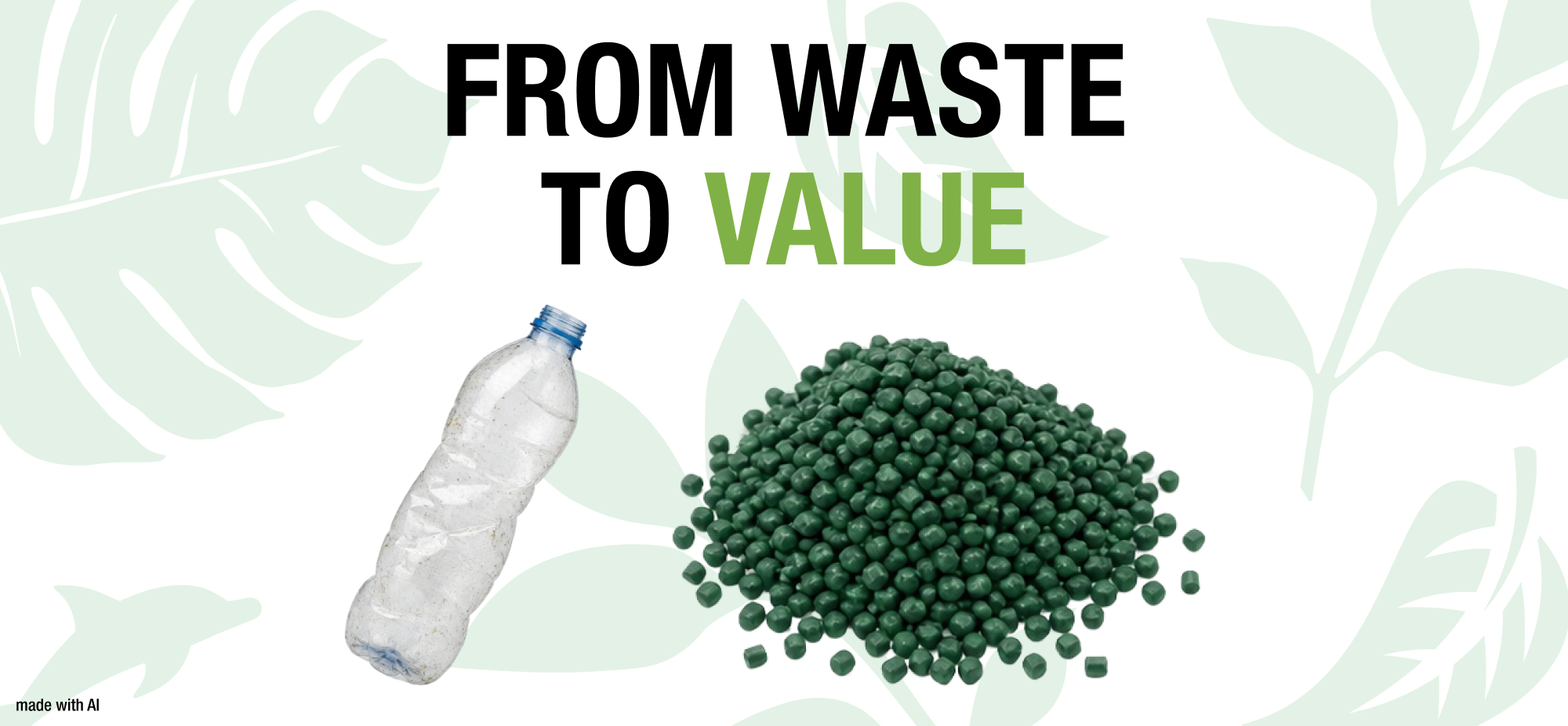
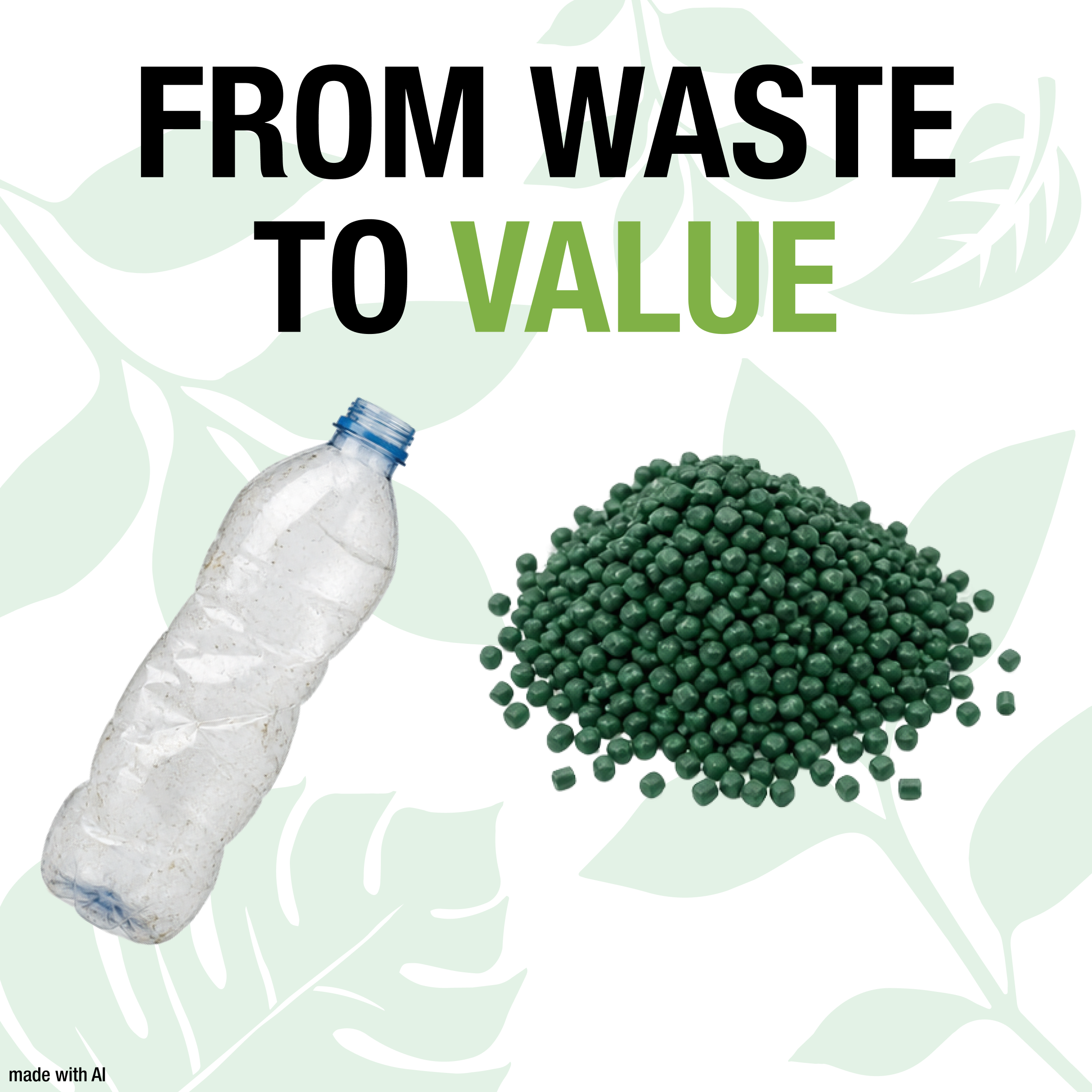
Journey from a plastic bottle to a recycled plastic product
-
With only about 2% of plastic waste successfully recycled into high-grade materials, advanced recycling is essential to keep plastics in use and out of nature.
-
Through 5 steps – precise sorting, shredding and washing, melt filtration, pelletizing, and remanufacturing, contaminated plastic bottles are turned into brand new market-ready products.
-
True pollution reduction requires not just recycling waste, but designing and marketing products made from recycled plastic.
Today, only 2% of plastic waste makes it into high-grade materials, which means we all must do more. The moment you recycle a plastic bottle, you kick off a crucial transformation from everyday waste to a brand-new product. Here is a typical process a plastic bottle goes through in its journey to become a recycled plastic product:
1. Sorting garbage
Your discarded bottle reaches the plant and gets separated by plastic type for proper processing.
2. Shredding and washing plastic
Heavy machinery cuts the bottle into small flakes and washes them, stripping away labels, adhesives, and dirt.
3. Melt filtering clean flakes
The clean flakes are melted down, passing through continuous filtration screens that trap microscopic impurities.
4. Pelletizing purified polymer
The purified polymer melt is extruded into clean, high-grade pellets ready for manufacturing.
5. Molding a recycled plastic product
These purified pellets are fed into injection molds to produce everyday products.
To decrease pollution, recycling plastic is only half the battle, we must also design, market, and create demand for products made from recycled materials. By turning high-purity resin into functional, high-quality goods, we close the loop on plastic waste and move toward a waste-free future.